Tuesday, August 16, 2016

Betioky and back

On Sunday, Wendy Bellmore (a SAMS bridger to the Diocese) and I accompanied Bishop Todd as he drove to Betioky.  It’s further from Toliara than I had thought – 95 miles by road.  Roughly a third of that distance route is on the Route Nationale 7, the rest on Route 10.

So no problem: all on interstates, yes?   Maybe a stop at a Starbucks on the way?  Well, no.

Long-time readers of this blog may recall that RN 7 is the road from Antananarivo to Toliara.  Although paved, it is replete with potholes, ox-carts, cyclists, people, and anything else that wanders along it.  Thus, RN7 holds its own challenges.  But those challenges pale into insignificance when compared with RN 10.  Other than for a half-mile or so on a steep slope, RN 10 has never been paved.  The only sign that it is a Route Nationale consists of classic French-style kilometer markers.  Fifty-five years of post-colonial wear and tear has obliterated the text and distance numbers on almost all of them.  They are still useful however – they distinguish the intended route from alternative tracks that successive drivers have created as they avoid potholes, deep ruts, washouts, and so forth, and also from tracks that occasionally branch off to goodness knows where.  A few stretches have been rebuilt, and we bowled along at 50mph.  But at almost the next moment, we were forced to crawl along in first gear.  Some of the ruts were amazing.  What, in the rainy season, is probably a near-impassable sandy squish bakes in the dry season into a single sandstone block of multiple ruts nigh a foot deep.  Four-wheel drive and a high wheelbase are de rigueur.

So the average speed one can make from Toliara to Betioky is about 20mph, and the 95-mile drive takes 5 hours.  We left at 4am.  At least there was no risk of being late for the church service – it would wait for the Bishop to arrive, whenever that was.

When dawn had broken, the splendors of the landscape emerged.  In places, flat grassy plains dotted with trees stretched to the horizon.  In others, steep slopes rose to the flat-topped rim of a geological basin that Todd says covers a vast area of southern Madagascar.  We descended a steep rocky valley and eventually crossed the floodplain of the Onilahy river that eventually reaches the sea near Toliara and which is sufficiently major to flow even in the dry season.

Villages were few, and composed mostly of wattle-and-daub huts or even mere interlaced sticks and roofed with thatch.  Despite the sparse habitation, a distressing proportion of the trees along the route had been heavily exploited for charcoal-making.

Just after 9am, we arrived in Betioky.  While it occupies one of the higher levels in the Malagasy structure of local government, it seemed as poor as most of the villages we had passed through.  Some boys had been deputed to look out for Bishop Todd’s vehicle, and they guided us to the plot of land where the church is worshipping while it awaits proper legal title and constructs a church building.  While the church (i.e., the body of people) has only existed for three years, over 140 people greeted us, all lined up singing to welcome the bishop.  A cactus was quickly uprooted to widen the gap to let the vehicle in.  We clambered out and, in accordance with Malagasy custom, said “salama” and shook hands with everyone(!)

At the moment, the church’s plot of land contains a couple of thatched wattle-and-daub huts.  Toilet facilities consist of “go behind that bush over there, and watch what you tread in”.  A picturesque collection of bits of tarp, and rice or cement sacks, had been set up to provide a worship area slightly shielded from wind and sun.  Some more pieces of tarp and sacking had been rigged to shade the altar, which was an old table covered with a white cloth adorned with a cross.  A small area in front of the altar had a floor, as long as you understand the term “floor” to embrace a frayed reed mat and a large piece of sacking turned upside down to conceal the text (from glimpses when the wind turned over the edge, I think it had been a massive cement sack).  Seating consisted of a few single-plank benches, and a handful of plastic chairs for the service leaders and honored visitors (in this case Wendy and I who accompanied Todd).  Maybe half the congregation sat on the ground.

The service, in its ramshackle improvised setting, was presided over by Bishop Todd arrayed in cope, mitre, pectoral cross, and with his bishop’s staff – the whole nine yards.  You may think this might have looked incongruous, even silly, but it did not.  A bishop’s vestments have roots that stretch back over 1200 years in documented sources, and presumably centuries longer.  They helped symbolize that the Christians of Betioky are just as much a part of the one Christian Church spanning time and place as any other Christians.


No fewer than 30 of the congregation, ranging in age from teenagers to one elderly grandmother, were to be confirmed in their recently acquired Christian faith.  One teenager fainted onto the Bishop while being confirmed.  We learned that he has been suffering from some nasty tropical fever, and while responding to medication (which he’s lucky to get in southern Madagascar) was still far from well.


The final hymn was “Andriamanitra he mahagaga”.  For those of us (including me) whose Malagasy isn’t quite yet up to that, that phrase is the first line of the hymn “How great Thou art”.  At St James the Less, we recently learned the Malagasy refrain to that hymn, and I joined in with gusto.  Being able to join in with Malagasy a cappella singing is tremendous fun.

During the announcements after the service, I was given a chance to speak.  I thanked the congregation for their welcome, and told them what a pleasure it was to join them in worship and in praying for the confirmation candidates.  I explained that shortly before coming to Madagascar we had heard at St James the Less of the hunger in Betioky (5 children in the Sunday School had died of starvation), that this had touched peoples’ hearts, and that money had been given to the Diocese of Toliara for famine relief.  I said that I would tell others of the Betioky Christians’ joy in the Gospel.

I must admit that news of the famine had caused me considerable trepidation in going to Betioky.  Would I see matchstick limbs and distended bellies?  I did not.  I suppose the famine was not of that severity, though five deaths in a congregation numbering around 150 is a scary toll.  There is chronic malnutrition in southern Madagascar at the best of times, let alone amid the diminished rainfall associated with El Nino.  Rev Noely – the priest whose district covers several churches, both in the poorest part of Toliara and in Betioky and newly planted churches further south - had spent much of the last several days in relief work.  Madagascar’s problems receive negligible coverage in the world’s media.  If they were widely reported, more might be done to address them.

Personal considerations pale in the face of such matters.  That said, were it not for the relief efforts, I would have felt acutely embarrassed that the congregation treated the three visitors to lunch, along with Rev Noely, Evangelist Zefa and the Catechist who lead services when Noely is elsewhere, and (perhaps because he is learning English) the fiancĂ© of one of Ev. Zefa’s daughters.   Lunch consisted of rice and chicken that had been cooked over an open fire in front of the huts, and served at a table shaded by a tree.  Water and pineapple Fanta were available to drink.

After lunch, a group of local men helped lash Rev Noely’s motorbike securely into the load area of Bishop Todd’s truck and, after many more handshakes, we set off for the 5-hour drive back to Toliara.  Rev Noely leads the Diocese of Toliara’s Finance Committee, and I have recently become Treasurer of People Reaching People  (http://www.peoplereaching.org/), the international support and fundraising group for the Diocese.  The journey provided an opportunity for us to discuss financial controls for economic development projects scattered around the Diocese, and how PRP functions.  The conversation involved an interesting linguistic triangle.  Rev Noely discussed various issues in French (that being our only common language).  I then translated both questions and answers into English so Bishop Todd could confirm my understanding and offer comments.  The Bishop reiterated his comments in Malagasy for Rev Noely.

The homeward journey treated us to glorious rays of the sun shining through gaps in cloud, followed by a fabulous sunset.  We arrived in Toliara without mishap about two hours after nightfall, returned Rev Noely to his family, and arrived at the Diocesan complex at 8pm, a mere 16 hours after leaving that morning.  For 13 of those 16 hours, Bishop Todd was either driving on appalling roads or leading a service in considerable heat – you’ve got to hand it to the guy!

(Photos on this blog article care of Wendy)

Sunday, August 14, 2016

"Tree Frog and Wake" music


Nothing to see in this video - but plenty to hear!  It was a challenge sleeping through this for 3 nights!

Service at the Cathedral

Today, I was the only white person worshipping at the Cathedral.  Bishop Todd, Simon and Wendy left at 4 a.m. for Betioky, but I was exhausted after so many days of teaching and could not face the 5 hour drive each way over unmade up roads.  Rev. Patsy had gone to Motombe to take the service, and I stayed here  in the Cathedral complex so that I could go to a slightly later service and only needed to walk for a few minutes.

It was just under 2 hours long with 35 minutes of announcements from a variety of people - St James the Less, no more complaints about how long our notices take, please!  Of course, it was all in Malagasy.   I had a vague sense of where we were in the service from it being the same liturgical format as in the Episcopal Church, and catching the occasional word for Lord (Tompo), Christ (Kristy) and Holy (Masina).  There was not a spare prayer book to use, which makes it much harder for me to know what was happening, as I find it much easier to read and follow, than listen and follow.

After  while of sitting in a pew by myself (because I was late arriving, and crept in at the back), a few children started to gather around me and share my pew and those around me.  Then I closed my eyes for a prayer and they had all disappeared again!

Then I was joined in the pew by the lady on the left in the photo below. Her name is Rinakely.


Banner making 2014 - Katedraly group

She kindly guided me with signs to sit, stand and move at the right time and to the right place.  When it came to sharing the Peace, we held hands (as is the Malagasy tradition) and sang a song, raising our hands together at the end, and she gripped mine so tightly at that point.  Then we spontaneously turned to each other, and gazed into each other's eyes - sharing the Peace and love of God without words.


Sunset on August 11th

This my be the best sunset photo I have ever taken!  It has not been photoshopped in anyway! It was certainly the most unusual sunset I have ever seen.


The heavens declare the glory of God!   
(Psalm 19:1)

Friday, August 12, 2016

Awake: a wake

When someone dies here, a wake is held that can last as much as several days until the funeral.  To keep awake, it is traditional to play music more-or-less non-stop.  Loudly.  The sound of traditional instruments might well carry a fair distance, but music played through loudspeakers certainly does.

Ah, you say, but didn't we write some time that the local utility here usually shuts down overnight?  We did.  So those holding a wake also use a portable generator.

The funeral takes place today of someone who died in the village a few hundred yards from here three or four days ago.   It's been a very long wake ...

Thankfully, we have been able to sleep despite the music, but the quality of the sleep has not been good.   So I'm feeling only half awake ... or a wake ... or whatever.

Immensity

It is easy to suppose that it is only modern people in Western (or other developed) countries, with the benefit of a scientific education, that grasp the immensity of the universe.  After all, it is only relatively recent science that has acquainted us with light years and so forth, and been able to estimate that the light from Andromeda that we saw from Ifaty the other night left that galaxy long before our species even existed.

On the other hand, that self-same science yields the electric lighting and the consequent light pollution that is precisely what prevents modern Western people from having personal daily -- or rather nightly -- direct eye-witness experience of the immensity of things.  The Hebrew prophet Isaiah commented that "God that sits above the circle of the Earth, and its inhabitants are like grasshoppers.  God stretches out the heavens like a curtain, and spreads them out like a tent to dwell in."  Isaiah's cosmology is extremely quaint.  Yet this quotation suggests to me that Isaiah may have had a greater visceral sense of human tinyness than most modern Westerners.

What does the immensity of the universe mean for humanity's place in the scheme of things?   Given what we now know, can a religious answer to that question be anything other than wildly implausible?

In particular, is not Christianity beyond preposterous?  Christianity declares not merely that God exists, and that God cares about us not just as a species on our modest planet but also as individuals, but also even that God became incarnate as one of us.  Does that not take human exceptionalism to absurd lengths?

To cap it all, the alleged incarnation is a one-of-a-kind historical event of a miraculous nature.  The 18th century Scottish philosopher David Hume (nicknamed by his contemporaries 'The Great Infidel') claimed that a miracle is always more improbable than that those reporting the event are deluded or fraudulent.  It seems to me that Hume was begging the question; unless we know the nature of God's intentions, we cannot estimate the probability of what God might do in an exceptional case.  But even so, given human tinyness in an immense universe, how could an astounding divine act around two millennia ago ever appear sufficiently probable as to be worthy of belief?

The only way it could become probable, at least the only way that makes any sense to me, is by means of a personal experience that, although non-sensory, has the essential features of a personal encounter.  And not just any personal encounter, but one where the encounter and the Being encountered cohere with hints given on the New Testament in a mutually illuminating way, such that it seems compelling that one is encountering God as manifested in Jesus.   Such an encounter is not for the idly curious; it requires (or so was my experience) a desire to know passionate enough to overcome a natural reluctance to have your life turned upside down in unpredictable ways of God's choosing.

But what meaning can Christians associate with the immensity of the universe, and the possibility of elaborate forms of extraterrestrial life?  Given when they were written, neither the Jewish nor Christian Scriptures address such a possibility.  Those Scriptures (as I interpret them) document in various genres a learning experience spread over many centuries.  Time and again, a part of the lesson to be learned might be summarized as "your conception of God is too small".  If it now turns out that, in the vastness of the universe, God has (so to speak) other fish to fry, and that God's dealings with humanity are but a tiny part of the overall scheme of things, that should excite and fascinate us rather than faze us.

Wednesday, August 10, 2016

Strength of a Woman!

Yesterday supplies needed to be moved from the storage space in the Cathedral to that of the newly completed Women's Center.


This oversized, red suitcase was full of heavy upholstery fabric and at a rough guess weighed around 100lbs.  It took four women to lift it on to Florine's head, and she then walked gracefully and easily over to the Women's Center from Rev. Patsy's office (having earlier carried it in this fashion, all the way from the cathedral).

Starry, starry night

On our recent trip to Ifaty that Sue mentioned in a recent post, we stayed overnight at Hotel Nautilus, where Sue and I and Paul and Maggie were in adjacent rooms under 10 yards from the beach.  Around midnight, Sue woke up feeling too hot, and asked me to open the door.  After a bit, we crept out in our nightclothes to admire the night sky.  The moon had set several hours before, and the only lights were the stars and planets, and a couple of fishing boats far out.   Paul and Maggie happened to wake too, and came out to join us.  Paul has a passion for astronomy, and helped us understand what we could see.

And wow could we see things!   Madagascar being so desperately poor, it has about the least light pollution of any country in the world.   Not only could we see the Milky Way as milky (duh!) areas in the sky, but we could also see the smaller Magellanic Cloud and dimly discern the larger one.  Andromeda was also visible.

Thanks to Paul, I can explain that the Magellanic Clouds (which an ignoramus like me would otherwise have thought of as strangely detached parts of the Milky Way) are actually other galaxies.  Andromeda is also a galaxy -- the other and furthest galaxy visible to the naked eye.   So we were seeing all four of these galaxies on the same night.   The light from Andromeda left there almost three million years ago, long before homo sapiens evolved from our hominid ancestors.

There were also a magnificent host of individual stars in our own galaxy, of course.    Of the planets, Venus and Mercury had already set, but Mars, Jupiter and Saturn were still visible.   (The other planets are not visible to the naked eye, and so were unknown to the Ancients.)

I was the first to spot a shooting star that night as it made a bright but brief streak above me.  But it was Sue who eventually saw the most -- five, IIRC.

Lying back on sun-loungers provided excellent viewing positions.   The four of us stayed out until about 1:30am when Mars was just about to set below the horizon over the sea to the west.

Tuesday, August 9, 2016

Days for Girls class - and our first postpartum kit in use!

Today's training of the women, covered food and water hygiene, fistulas, family planning, and learning to sew the Days for Girls liners.

Dr Zoe teaching
There are around 25 women in class, about 5 of whom have used sewing machines before, plus some who have never sewn before and some who are learning to use scissors to cut fabric. The new sewing machines are somewhat unreliable, and getting them to work properly took a lot of time today.

Cutting liners
Lunchtime activities!
This afternoon, we were able to pair each experienced sewing machine user with a novice, and it was wonderful to see the pairs working together.


We gave out out first Days for Girls Postpartum kit on Saturday to Meza, who is due to give birth shortly. 

DfG suggests loaning these postpartum kits to women for the time after the birth when larger pads are needed.  After the women have finished using the kit, they will wash it and return it to the Cathedral, where someone will be responsible for sterilizing it with a bleach & water solution. 

Nolavy was supposed to come to collect one today, but instead went into labour, and has a baby boy!  Meza's kit was handed to Nolavy (as they live very close to each other) and a second kit taken to Meza. 

Sunday, August 7, 2016

Highlight of the Trip!

We are once again having a wonderful and very fruitful trip to Madagascar.  We have now done two days of sewing classes with the women, and one day of teaching the women and girls about menstruation, reproduction and hygiene.  They were fascinated to discover more about their bodies than they had ever known before. We charged the women in class with telling what they had learned to all the girls and women they know. Around 100 women, plus girls and babies came to the presentation on Saturday.

We explained about the germs transferred via hands by putting red glitter on my hands, and silver on those of  Dr Zoe.  Then we shook hands with people at the end of rows, who shook hands with their neighbours along the row.  It was then possible to see how the glitter was transported from hand to hand

The first arrivals for the DfG presentation


Dr Zoe & Sue


We gave out 20 kits as door prizes.


I was so thrilled after the service on Sunday morning to see a group of girls gathered around Tantely.  When I looked closely they were examining one of the Days for Girls cards about the monthly menstrual cycle, and she was carefully teaching them what she had learned in the previous two days.

We drove to Ifaty for lunch and are having a night’s break at Hotel Nautilus. We are planning a pirogue ride in the morning, followed by visiting the spiny forest.  Then Tuesday will be back to classes.  It was bliss to have a warm shower this evening, after swimming in the infinity pool.

Lost and Found! Or super-Bishop!

On Friday evening, we rewarded ourselves with drinks and dinner at Le Blu.  We sat outside on the deck, by the beach, enjoying the stars and the sea, and getting chillier - to the point where my engagement and wedding rings dropped off my hand when I held it downwards.  I just caught the eternity ring, but the engagement ring dropped through a gap in the decking.

Various people jumped up with flashlights, and Robby located it about 18 inches in the sand below.  Before I could work out what to do Bishop Todd (closely followed by Robby who did not want to be left out of the adventure) were on their bellies crawling several feet underneath the deck to retrieve the ring!  The restaurant staff looked rather bemused!

The video of the event is very amusing, but need to be trimmed before I can post it

Saturday, August 6, 2016

What happened?

(I am grateful to Robby Keen for confirming that I have recorded the following accurately.)

Wednesday afternoon, some of our fellow visitors to Toliara accompanied the Archdeacon and one of the Evangelists to take part in a service at Ankilibe, the coastal village where Matthew and I had been with Patsy in 2014. 

Before arrival in Ankilibe, one of the visitors, Robby Keen, had a mental image of an elderly woman who was not blind but who could not see properly.

During the service, an elderly lady was clutching her Bible, and so must normally be able to see to read.  Yet it was evident that she could not make out the text on this occasion.   At the end of the service, she was the first to come forward to be prayed for.   It looked as if she was suffering from cataracts.  Thus, while not blind, she lacked her accustomed vision.

After being prayed for, the lady could read the print in the Bible the Evangelist showed her.  Once she returned to her place, she picked up her own smaller (and thus small-print) Bible and was reading in that.   It was clear that her neighbors were amazed.  So many people then thronged forward to be prayed for that the visitors, Archdeacon and Evangelist found it physically difficult to leave.

Women's health

I'm writing this, rather than Sue, because we're conscious that we've posted so little since arriving in Toliara and Sue has been just so busy.

Right now in fact, Sue, our friend Maggie, and Dr Zoe, are leading a session attended by over 200 Malagasy girls and women, focusing on the biological, health and hygiene issues around reproduction and menstruation, and how the Days for Girls kits could play a valuable role replacing more improvised approaches during 'that time in the month'.   This kind of material is not covered in the local schools, so receiving accurate information is a significant thing in itself.

Dr Zoe is a Malagasy doctor from Antananarivo.  One of Dr Zoe's professional qualifications is a Masters degree in Public Health for which she studied in Hawaii.  She and her family have come to Toliara for a week.  Their trip is in part vacation, and in part so that Dr Zoe can explain women's health issues in Malagasy here in Toliara.  Before coming, Dr Zoe took the Days for Girls Powerpoint presentations in English and created versions in Malagasy.  She also brought a Malagasy video about 'tippy taps' of which more in a later post.  It is wonderful to have her here in all kinds of ways.  Most obviously, of course, Dr Zoe can ensure that nothing gets garbled in translation between English and Malagasy.  Also, she is enthusiastic about the contribution Days for Girls kits could make in the future throughout Madagascar.  On top of that, she's a lovely person!

If I understand the plan correctly, a sizeable number of the Days for Girls kits we brought from the US will be distributed today on a lottery basis.  "Runners up", so to speak, will be given toothbrushes and toothpaste; many folk here simply can't afford such things.   Days for Girls kits will also be available for purchase.

In addition to today's large meeting, Sue has been teaching a group of around 20 women to make some items intended both for local sale and eventually for Fair Trade sale in the US.  The same class will learn how to make Days for Girls kits.   This smaller group of women includes the candidates short-listed by the Diocese for a new position as Coordinator of Women's Crafts.

I'm sure Sue will post some better articles in due course, with pictures.  But we felt that especially those of you who contributed in some way to the Days for Girls kits we brought with us, and the supplies to make more, and those praying for the success of our venture, deserved a post today.

Bookkeeping

Gosh, you must be keen if you're reading a post with a title like this one!

I've had a number of sessions with Angelin, the Diocesan bookkeeper.  He has a degree that includes accounting, but had no experience of accounting software before the Diocese hired him.   He is keen to do his job better and more quickly.

We are honing our language skills by him speaking in English and me speaking in French.  Occasionally we switch when words fail us.  But I think Angelin is winning!   That is excellent, as partnerships between the Malagasy and others will likely flourish best if the Malagasy can converse in English.

In addition, there is so much helpful material available on the internet in English for using Quickbooks -- the bookkeeping package by Intuit that the Diocese of Toliara uses.  There's only a limited amount of French material (mainly from French-speaking Canadians).   With greater fluency in English, the Malagasy will find it easier to help themselves without foreign assistance, which is of course the long-term goal.

So far Angelin and us have discussed:  how to account on a project-by-project basis for bank fees for foreign exchange transactions on funds donated from outside Madagascar;  how to use the Quickbook concepts of Customers and Jobs to track (say) how many US dollars given for a particular purpose remain unconverted into Ariary (the currency of Madagascar);  and how to set up budget reports to monitor how various categories of day-to-day spending compare with the budget for the year.

It's all very humdrum, of course, but it's part of what is needed so that the Diocese can continue use money in a responsible way as it continues to grow rapidly, both in its specifically religious activities, and in humanitarian relief, education and economic development projects.

Tuesday, August 2, 2016

Tsinjoriake Village

On our drive to Toliara on Tuesday, we stopped for a few minutes at this village, just a short distance before entering Toliara.

One of the village elders lined everyone up to meet us:


We had saved the uneaten breads and pastries from breakfast and had asked our driver to stop at a suitable place to give them away.  He told us he had also filled discarded water bottles at the hotel to give to this village as they do not have a source of water.  We wished we had known of this need beforehand, as we would all have saved the bottles we had drunk at the hotel and filled them from the tap too.

Alain explained that the tin hut in the middle of the photo is the village school and Anglican church -  a part of the Diocese of Toliara.  The entire village is Christian.

The tin used to surround the Cathedral complex, but when the wall was build instead, the tin was re-purposed.


Arrived in Toliara

We arrived in Toliara a few hours ago.  The journey was without incident.  This was remarkable, as Sue had been spectacularly sick, with other symptoms, just last night.  To those whom we notified, and who prayed for today's travels:  thanks.

Monday, August 1, 2016

A Day of Rest at Isalo National Park

As Sunday is clearly not a day of rest for Bishop Todd and Rev. Patsy, we are joining them in having a relaxing day today!

Leaf flatid insects

Ring-tail lemur

Verreaux's Sifaka

Red-fronted brown lemur


Ring-tailed lemur


The only sifaka left in the park - the others left when a forest fire destroyed the trees they like to eat.
She is elderly, and  has now become part of the ring-tailed group.

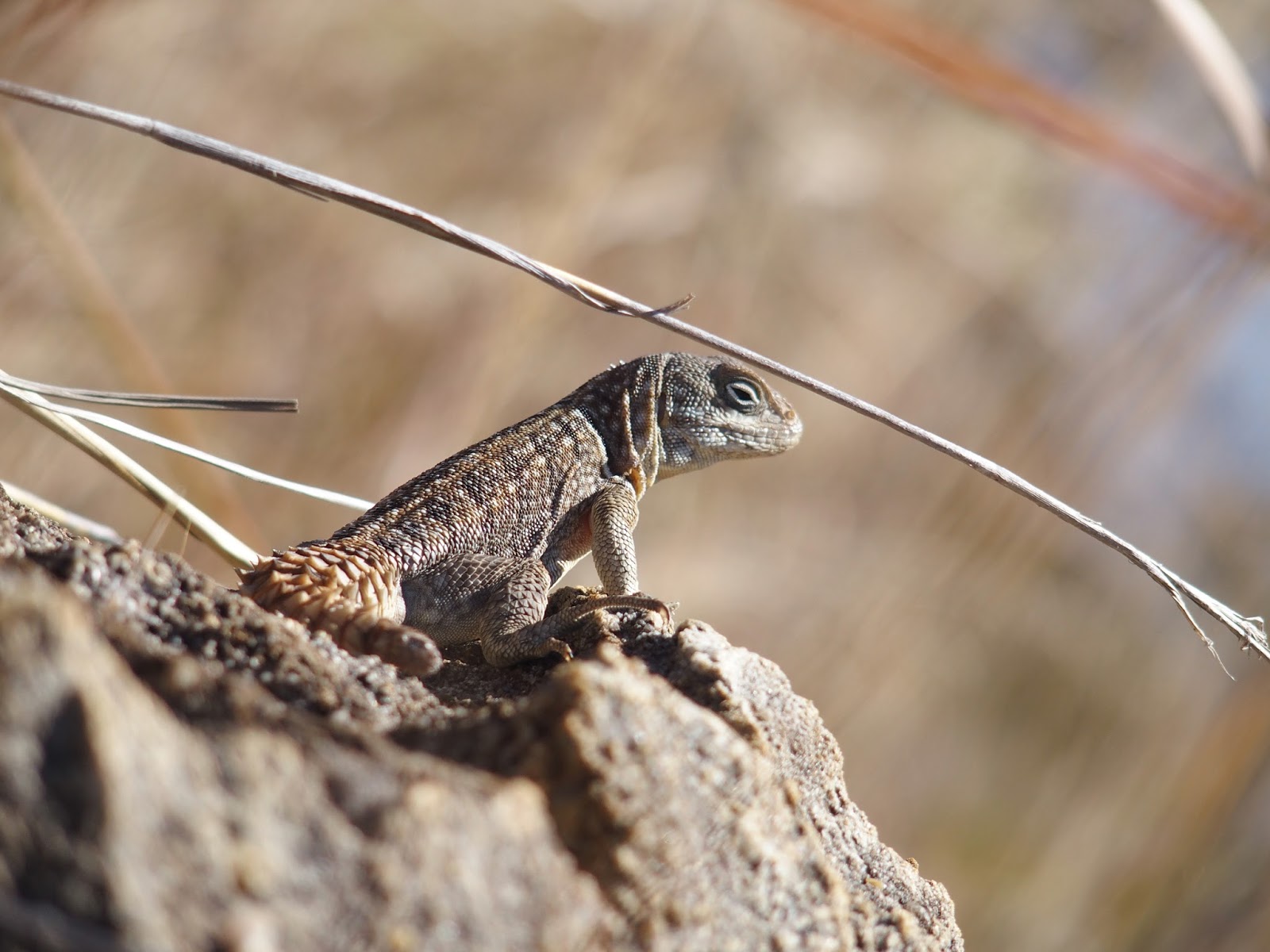
Spiny-tailed lizard


Sunday, July 31, 2016

Worship at Sakaraha today

For members of St James the Less  - Reverend Hery was so impressed with our singing the refrain to "How great thou art"  in Malagasy last week, that he included the hymn in today's worship!


The four people in red or teal anoraks walked 12 hours to come to Church - 8 hours on Saturday and then 4 hours on Sunday morning (and then 12 hours back, of course). That's real determination to worship!

Saturday, July 30, 2016

Adjusting the road bridge before we drove over it, on the way back from Soatanana!


Photos of Lac Hotel, Sahambavy:


Tana to Fianar photos - 2 Soatanana Weaving Village


Tetradecimals

Today we visited the nature reserve operated as a cooperative of the nearby village of Antja.  This gave us our second fix of lemur viewing, as the reserve contains several families of ring-tailed lemurs.

The local people at Antja use the tetradecimal (i.e., base 14) number system.  In the familiar decimal (i.e., base ten) number system, 12 (say) represents one lot of 10 and two units.   In the hexadecimal (i.e., base 16) number system much used in computer science 12 represents one lot of sixteen and two units – a total of eighteen.   Analogously, in the tetradecimal number system, 12 represents one lot of fourteen and two units – a total of sixteen.   You get the idea.

Why do the villagers at Antja use the base fourteen number system, a practice that (as far as anyone has been able to ascertain) is unique in the entire world?   The explanation is as follows.   We use the base ten system because we can count to ten using our fingers, but then need to start over as we’ve run out of fingers.  In Antja, the villagers carry around the tails of the ring-tailed lemur.  (Presumably this was originally for talismanic reasons, though the roots of this cultural practice are now only conjectural.)  Extraordinarily enough (contrast with cats for example), every ring-tailed lemur has precisely fourteen black stripes on its tail.*  It was therefore natural for the Antja villagers to count in multiples of fourteen.


·        *  Some sources suggest that the scientific Latin name for ring-tailed lemurs (catta catta) may be a corruption of the Latin word for the number fourteen quattuodecim.  Whether that is so or not, catta catta definitely does not derive from the Malagasy name for these lemurs, which is maki, based on some of their calls.

Tana to Fianar photos - 1

Paul at the seed shop

Telma phone shop

Wood carving at Soa Guesthouse, Antsirabe

Traditional dancers at lunchtime
Hotel Artisan, Ambositra

Friday, July 29, 2016

Tana to Fianar (or, in full, Antananarivo to Fianarantsoa).


Much has happened since we last wrote in the blog.  We have not really had much internet connection, or time to write, so I’m playing catch up tonight! Photos will be added to this when I have a better connection!

Soa Guesthouse at Antsirabe lived up to its “good” name – pun fully intended here, as Soa is the Malagasy word for good.  It was beautifully decorated, with pretty plantings outside and good food too!  We lay outside on the grass looking at the stars (one of Paul’s many enthusiasms in life).  Tonight’s (Friday’s) stars at Antsirabe were even more striking as we had a wider view of the sky.  Even as the sun was setting we were able to see, Venus, Jupiter, Mercury (Paul tells us we are in the top 1% of people in this day and age, who have seen Mercury with the naked eye) Saturn and Mars, plus the southern cross and more! 

Our bungalow on stilts, in the lake at Lac Hotel, Fianarantsoa is beautiful, and there are wonderful plants growing in the gardens here, along with lettuce, herbs and cute animals which will turn into dinner (makes one think of becoming vegetarian).

We had a wonderful day, taking a 3 hour drive as a detour off the main road – indeed off anything approaching a road for the last portion -  to visit a silk weaving village called Soatanana (“Good Village”).  The occasional stop was made to reassemble the wood bridges before driving over them!
On the way we stopped to see the tapia forests, where the Malagasy silkworms live out their life cycle.  The village protects the trees so that there is food for this native silkworm, which lives only on these trees.  We were shown the preparation of the cocoons, spinning with a drop spindle, winding the skeins via a home-made umbrella swift, and warping of the threads, before we entered one of the houses to see a woman weaving.  It was like good back in time to the Middle Ages, with space downstairs for the animals at night (and storage of her bicycle!) and one room upstairs with bed, cooking pots and weaving loom.  But this was not a re-enactment – it is real life.  The whole village of women and children had turned out to show us their wares, and threads.  They work as a collective and make a small charge to visitors to pay for the upkeep of the road and so on.   We tried to buy from each family, to be as fair as possible. 

Other highlights of the trip so far:

  •           finding a road-side stall and buying 16 packets of vegetable seeds for a hoped-for garden in Toliara, ready for Glen Tracy’s visit next February.  Now we need to find / make good soil.  Maybe Paul can teach Pierre how to turn the pig manure into good compost ready for Glen’s visit.
  •           buying a Malagasy phone and plan for 30 days for around $30.  We couldn’t have done this without the help of Maggie and Paul and their fluent French – let alone Paul’s cell phone knowledge from his days developing cell phones!
  •           having lunch in Antsirabe while watching the traditional dancers
  •           being thankful for electricity at home – such a privilege!  It was challenging getting washed, dressed and packed by small flashlight before dawn.  (The generator at Hotel Artisan is switched off between midnight and 6am.)
  •          seeing our first two lemurs of the trip on a small island just outside Paul & Maggie’s bungalow.
  •          discovering it was worth bringing silk long-johns to survive the chill of Ambositra, and that wearing a t-shirt, collared shirt and both fleeces to eat dinner may be undignified but makes the unheated restaurant much pleasanter!
  •          having fascinating conversations with several young people from the lycee (secondary school) near Lac Hotel.  They had heard us speaking in English and came to practice their language skills, which were very impressive (especially considering they had all only just finished first grade). 
  •          a small heater in the room at Lac Hotel, which has made writing this manageable.  It is luxurious after the last few cold nights.
  •          further gratitude for hot water, and a consistent supply of it.  Cries of “no, shower, no!” emanated from it this morning as the water turned cold part way through! Argh!

Quote of the trip (so far) from Paul:  “I am very interested in carrots”!  (He meant to say “stars”!)

Tomorrow (Saturday) we will visit Madagascar’s only tea plantation and see more ring-tailed lemurs (“maki”) as we travel on to Isalo.  Sunday we will worship at Holy Trinity (Trinite Masina) at Sakaraha church.  


Sue

Wednesday, July 27, 2016

Pity there's no snow!

Some of you may merely have glanced at the title of this post and concluded that I must be alright as I'm in a typically whimsical mode.

If you have so concluded, you would be correct.   28 hours of air travel passed better than expected, and we arrived safely at Antananarivo airport.  The altitude reading on the plane when we landed read 1268 metres (about 3800 feet) above sea level, which is higher than many Austrian ski villages.  The Malagasy capital is 18th highest in the world.  No wonder, then, that although it's in the tropics, it's a bit chilly in the middle of the southern hemisphere winter.

Now what if there were snow in Madagascar?   Skiing and lemurs would be an awesome combination.  I think I might be tempted to come live here!

Simon

At Manga Guesthouse. Thanks be to God!

Hurrah! Everything went very smoothly with all three flights, including our friends (Maggie and Paul) arriving just as we started to board in Paris.  All our baggage arrived and we got to Manga around 2 a.m.

Breakfast soon, and then we set off for the drive to Antsirabe.  The sun is fighting with the clouds, and might win!  

Extraordinarily, while we were having juice in Paris airport, we heard "Hello, Babbs!" and there were Bruce, Shay and Abigail Mason, on their return from Tana.  It was lovely for both sleep-deprived families to have time to catch up on each other's news, and to keep each other awake for our next flights!  We had seen Avery on Sunday at St James the Less, with his grandparents,  We had been sad not to be able to be here at the same time as the Mason family this year, so it was great to catch up in these ways! 

Monday, July 18, 2016

Even the smallest details!

Late last week, I received an email from Miriam at the Church of the Annunciation, Gurnee, Illinois, saying they would like to help doing something for Toliara again in the future.  I had no idea what that might be.  

Then on Sunday morning several large bags of fabric arrived. Miriam stopped by to collect them today, and once again the Church of the Annunciation members will be washing and ironing fabric ready for stitching, in the fall, to make bags for more Days for Girls kits. 

Thanks to Carol for donating the fabric, Val for transporting it, and for the willingness of Miriam and members of Church of the Annunciation to do more laundry!


Before the fabric arrived on Sunday morning, I was given around 50 reading glasses, some with cases but mostly without them.  Lo and behold, the bags of fabric contained some pieces of ready-quilted fabric, which have now been serged into simple glasses cases! 

Thanks be to God, for great timing and once again for His careful planning of even the smallest details!